The way we use our bodies at work shapes how our bodies feel after work. In Croydon, that now covers a broad spectrum, from commuters dashing through East Croydon with a laptop bag biting into one shoulder to remote teams holed up in spare rooms across South Croydon, Purley, and Addiscombe. When hours of concentration pile up, so do predictable patterns of neck strain, mid back stiffness, wrist and thumb irritation, gluteal weakness, and niggling low back pain that flares at precisely the wrong moment. An experienced Croydon osteopath sees these patterns every week, and the support on offer goes well beyond a quick click or a cursory stretch handout. Good osteopathic care meets you where you work and layers practical changes onto skilled hands-on treatment so that improvement holds when projects heat up again.
The musculoskeletal price of focused work
Intense knowledge work rewards stillness and tunnel vision. The nervous system tunes out nonessential input, including subtle signals from joints and muscles that would ordinarily prompt movement and repositioning. Over a day, common mechanisms do the rest:
- Prolonged sitting reduces hip extension, compresses the anterior hip joint, and puts the gluteal complex to sleep. That matters for lumbar health, because strong, well-timed hip extension reduces shear on the lower spine. Forward head posture and rounded shoulders load the cervical extensor muscles and the small joints of the neck. The deep neck flexors tend to disengage and the trapezius tries to do everything. Hello, tension headaches. Laptop use without a separate keyboard pins the elbows and wrists in awkward angles that aggravate the flexor tendons, the thumb’s CMC joint, and the median nerve in susceptible people. A quiet, stress-laden sprint toward a deadline adds sympathetic arousal. Sleep shortens, breath becomes shallow, and pain amplifies. The biological volume dial turns up.
None of this requires dramatic injury. It builds hour by hour, then announces itself when you stand after a long call or pick up a toddler after a day at the screen.
What an osteopath actually does for desk-bound bodies
At its best, osteopathy is a structured, person-centered process, not a single technique. In an osteopathy clinic in Croydon, the first appointment usually starts with a focused conversation: what hurts, when, what aggravates or eases, and what your work looks like in practice. Ten hours on a MacBook at a kitchen island feels different from six hours at a sit-stand desk with a wide monitor. The case history, if done well, reads like a map of the last six to twelve months of your body’s experience, including sleep, stressors, activity levels, and prior bouts of pain.
A registered osteopath in Croydon will then examine movement and tissue qualities. Expect to see how your neck rotates and sidebends, how your shoulders move overhead, and how your hips load when you hinge or squat. Palpation tests tissue tone, local tenderness, and joint end-feel. Simple functional checks, such as a repeated lumbar flexion test or sustained neck position, can reproduce or ease symptoms. The goal is to link symptom-generating structures with the habits that keep them sensitized, then choose the right blend of hands-on therapy and targeted movement.
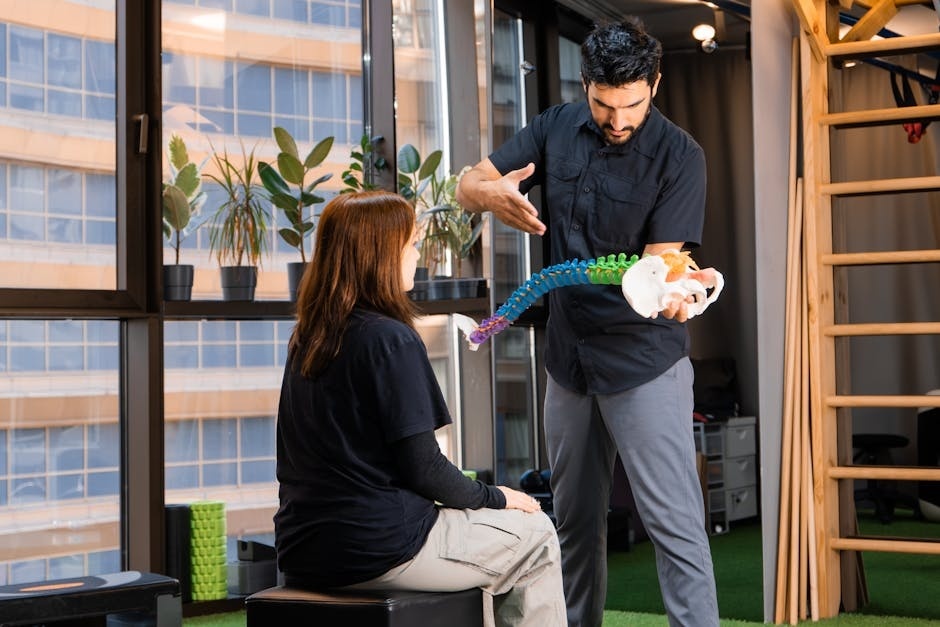
Education is part of treatment, not an afterthought. Pain is usually multifactorial. For work-related aches, fear of movement and guarding complicate the picture. Clear explanations reduce threat and improve outcomes. When you know your low back pain is driven by deconditioned hip extensors plus long static sitting, and not a catastrophe on your MRI report from five years ago, you move with more confidence. That is when exercise sticks.
Manual therapy that buys you room to move
Hands-on techniques are not magic. They are a way to change input to the nervous system, ease mechanical restriction, and create a window where meaningful movement retraining can happen. Common methods in osteopathic treatment in Croydon include gentle joint articulation, soft tissue and myofascial work, muscle energy techniques that use light contract-relax strategies, and, where appropriate and with consent, high-velocity low-amplitude thrusts. For thoracic spines that have gone from springy to stubborn, rhythmic mobilization restores flexion and rotation that make overhead work and breathing feel human again. For deskside necks, treating the mid back often reduces cervical pain more effectively than chasing every sore knot.
Minute to minute, the dosage and style changes with the person. If your trapezius is touchy, sustained pressure may not land well; instead, contract-relax at 20 to 30 percent effort lowers tone without a fight. For wrist and thumb issues, short sessions of tendon gliding and carpal joint mobilization, combined with education around load and thumb grip patterns, can calm irritability so that strengthening can proceed. Manual therapy in Croydon, done judiciously, is a catalyst, not a crutch.
Exercise that targets the right weak links
Recovery for desk workers and remote teams always includes movement you can repeat on the busiest days. A Croydon osteopath will usually prescribe two tiers of exercise: quick “movement snacks” you can do between calls and slightly longer strength sets you can batch three or four times a week.
For the neck, the deep neck flexor hold is underrated. Supine with a small towel under the head, a gentle nod as if saying yes, then hold for 10 to 20 seconds without recruiting the sternocleidomastoid. Two to three sets build endurance that translates directly to better joint pain treatment Croydon Sanderstead Osteopaths head carriage. Combine that with thoracic extension over a firm foam roller for 60 to 90 seconds, then active rotation to each side.
For the low back and hips, a hip hinge pattern with a resistance band around the hips teaches the posterior chain to share the load. Ten to twelve reps, slow on the way down, focusing on a long spine and weight through the heels, restore hip strategy so the lumbar segments do not compensate. Add dead bugs or bird dog variations to improve trunk control without provoking pain.
For the wrists and forearms, eccentric wrist extension with a light dumbbell and a towel under the forearm helps with extensor tendinopathies common in heavy mouse users. Start at a load where you feel mild to moderate effort by the last three reps, two sets of 12 to 15, two or three times per week. Thumb CMC irritation often responds to isometric pinch holds at low force and grip variation education, for example, switching from a pinch-to-pull gesture to a whole-hand grip where possible.
The art is in calibration. Exercises should feel achievable during a flare, not only on good days. A local osteopath in Croydon will usually test the first few reps with you, then progress or regress based on your response.
A 60-second desk reset you will actually do
When meetings stack back to back, you need something you can finish before the next chime. Try this fast sequence, twice each workday, ideally at predictable anchor times such as after your morning coffee and mid-afternoon.
- Stand, place hands on the lower ribs, and take three slow nasal breaths, expanding the ribcage laterally more than the upper chest. Thoracic extension: hands clasped behind the head, gently lift the sternum and look to the ceiling, then return to neutral, five reps. Neck: slow rotations right and left, then sidebends, staying under discomfort, four reps each direction. Hips: hinge pattern, pushing the hips back with soft knees, maintain a long spine, eight reps. Wrists: open and close hands firmly, then flexion and extension with the elbows straight, five reps.
Set a recurring reminder and keep it short. Consistency beats variety.
Home and hybrid ergonomics that quietly reduce strain
The best desk setup is the one you can maintain. In Croydon’s mix of flats and shared houses, minimalist tweaks carry more value than a shopping spree. If you work on a laptop, an external keyboard and mouse pay for themselves quickly because they let you raise the screen to eye height. A stack of sturdy books is as good as a branded riser. The top of your screen near eye level and at arm’s length reduces cervical flexion and squint-induced peering.
Your chair should let your feet rest flat, with knees close to hip height or slightly below. Elbows at roughly 90 to 110 degrees remove strain from the forearms and shoulders. If you cannot change the chair, change what meets it: a folded towel for lumbar support, a cushion for seat height, or a footrest improvised from a box. Wrist rests are not universally helpful; for many, a relaxed forearm position floating above the keys is more natural.
Lighting matters. A bright, sharp light behind the screen makes your pupils fight the contrast and coaxes forward head posture. Angle desk lamps to the side, keep glare off the monitor, and prefer warmer light in the late afternoon to wind down. Noise control can be as simple as closed-back headphones for focus blocks.
In a small spare room in South Croydon, a sit-stand desk may feel excessive. You can still cycle positions: work seated for 30 to 45 minutes, stand for the next short task at the kitchen counter, then sit on the floor with the laptop on the coffee table for 10 minutes while you sort email. Variety is an ergonomic principle. Static perfection rarely exists.
What remote teams can put in place by next quarter
Companies with distributed staff around Croydon and the wider South London area can reduce musculoskeletal issues with a handful of practices. First, embed movement into the meeting culture. Many teams thrive with 50-minute hours that leave a 10-minute cushion between calls. Second, give people permission and tools to optimize their setup at home. A modest stipend redeems its cost: external keyboard, mouse, and monitor change the neck and wrist load profile overnight. Third, make short, practical education available. A 30-minute workshop led by an osteopath near Croydon on movement snacks and self-checks keeps people honest during sprints. The best sessions are interactive and specific to the team’s tooling and timelines.
A Croydon osteopath can also support with one-to-one or small group virtual consults. Screening questions identify who needs in-person care and who can resolve with tailored exercise and setup tweaks. For teams that track well-being metrics, watch for patterns in MSK discomfort in pulse surveys, days of sickness related to back or neck pain, and self-reported pain interference with work. Even small shifts in these numbers compound over a year.
Finally, do not forget the walk. Croydon has easy wins: a loop around Wandle Park between midday calls, steps by Boxpark before the evening train, or a quick climb up to Lloyd Park if you live near South Croydon. An extra 1,500 to 2,000 steps a day often correlates with fewer pain flares, better sleep, and a clearer head.
Three real-world vignettes from clinic life
A finance analyst who commutes via East Croydon arrived with neck pain that spiked every Friday. He used a laptop exclusively at home and a dual-monitor setup in the office. Assessment showed limited thoracic rotation and overactive upper traps. Manual therapy focused on thoracic articulation and first rib mobility, paired with deep neck flexor holds and a doorframe pec stretch. He bought a £20 keyboard and used a book stack under the laptop. After three sessions over four weeks and a non-negotiable 60-second reset twice daily, his Friday headaches faded. We spaced appointments to fortnightly, then discharged with a once-per-month strength progression email.
A software developer in South Croydon with wrist and thumb pain had ramped up hours before a product release. His thumb CMC joint was irritated by pinch grips and a narrow mouse. Treatment included gentle joint mobilization, tendon gliding, and isometric pinch work. We switched him to a larger vertical mouse and adjusted his keyboard angle. Two shorter coding blocks per hour with a 90-second forearm routine broke the pain cycle. Four visits across eight weeks, then a maintenance check-in two months later. He returned to climbing at the weekend, replacing full crimp grips with open-hand where possible, which reduced overall thumb load.
A team lead managing a remote marketing group scattered across Croydon, Bromley, and beyond asked for a clinic-to-company partnership. We designed a quarterly education series and virtual DSE-style check-ins for those with ongoing symptoms. Measurable outcomes in the next quarter included a modest reduction in self-reported neck pain prevalence and fewer ad hoc sick days related to back pain. The key was not perfection in every home setup; it was a shared language for quick checks and permission to move during meetings.
When self-management is not enough
Most desk-related pain is mechanical and responds to conservative care, but certain features call for prompt evaluation. If any of the following appear, book a medical assessment before or alongside osteopathic care.
- Unexplained weight loss, fever, or night sweats alongside back or neck pain. Progressive neurological signs such as worsening weakness, numbness, or changes in bowel or bladder control. History of significant trauma with new severe pain, or pain that is unrelenting at rest. Persistent pain in someone with a history of cancer or significant osteoporosis risk. Severe headache with visual or neurological changes that is unlike any prior headache.
Registered osteopaths in Croydon are trained to screen for red flags and will refer when appropriate. Good collaborative care protects you from delay in the rare but important cases that need a different pathway.
How to choose a practitioner who fits your goals
Look for a registered osteopath in Croydon on the General Osteopathic Council register. Registration signals that the practitioner has recognized training, maintains ongoing CPD, and adheres to professional standards. Beyond the basics, check whether they routinely work with desk workers and remote teams. That does not mean they avoid athletes or other populations; it means they understand the quirks of eight-hour screen days and can explain how to position your monitor without sounding prescriptive or selling gadgets.
Pragmatic markers of a good fit include clear explanations, a plan that blends manual therapy with exercise you can actually perform between calls, and a timeline for reassessment. If you feel you must attend indefinitely without objective change, ask why. The best osteopath in Croydon for you is the one whose approach helps you reach your specific outcomes, whether that is coding pain-free through a release week or feeling fresh enough for an evening run after a day in Teams.
Local knowledge helps. An osteopath south Croydon might suggest park loops you can use on lunch breaks or know which coworking spaces have sensible chairs. An osteopath near Croydon who has worked with distributed teams may offer lunchtime group sessions timed for hybrid days around East Croydon.
What a typical care plan looks like
Care varies with complexity, but many desk-related musculoskeletal issues improve within three to six sessions over four to eight weeks. Early sessions emphasize symptom relief and movement confidence. Manual therapy reduces pain and stiffness enough to make exercise feel safe. Mid-phase care focuses on progressive loading and habit change. The final stage reduces appointment frequency and hands you a compact maintenance plan.
For acute low back pain without neurological deficits, expect guided movement within the first session, reassurance, and manual techniques that increase your available range without aggravation. For neck pain with occasional headaches, the mix often includes thoracic mobilization, deep neck flexor endurance work, scapular control, and workstation tweaks. For wrist or thumb problems, the timeline may depend on how you adjust load at the keyboard and outside work. Even small changes, such as a different mouse or reduced pinch force, speed recovery.
Cost and frequency differ across clinics. An osteopathy clinic in Croydon will usually discuss expectations up front, including the likely number of sessions. If you have private health insurance, check whether it covers osteopathic treatment in Croydon and whether you need a GP referral. Many policies reimburse a set number of visits per year.
Evidence, guidelines, and realistic expectations
The broader evidence for manual therapy and exercise in common spine pain supports a combined approach. Clinical guidelines for low back pain in the UK emphasize staying active, using manual therapy only as part of a package of care, and prioritizing self-management. For neck pain and headaches related to muscle tension, strengthening of the neck and shoulder girdle shows benefit when done consistently over weeks. None of this is instant. Tissue adaptation requires repetition. Nervous systems learn safety through experience.
That said, quick wins exist. Many people notice immediate freedom after thoracic mobilization or rib work. Others feel the turning point when a simple exercise, such as a hip hinge with a band, clicks and daily movements stop provoking pain. Be candid with your clinician about what you can implement. A brilliant plan that demands an hour a day will wither. A 6 to 8 minute prescription embedded into your afternoon and evening will survive your calendar.
Micro routines that fit Croydon life
Two small anchors help desk-bound bodies. First, pair movement with daily objects. Every time you put the kettle on, do 10 calf raises and eight slow thoracic rotations while the water heats. Every time you wait on a platform at East Croydon, practice standing posture with weight balanced over the midfoot and a slow nasal breath cycle. Second, schedule a weekly strength slot as seriously as a meeting. Thirty minutes on Tuesdays and Fridays for hinge, row, and split squat patterns will protect your back better than sporadic Sunday heroics.
For those working remotely in South Croydon flats with limited space, resistance bands and a single adjustable dumbbell cover most needs. A chest-supported row over a bench or even a sturdy coffee table spares sensitive backs. Split squats loaded front-foot elevated build quads and glutes without compressing the spine. A simple tempo, three seconds down and one up, keeps form honest at lighter loads.

Croydon-specific opportunities to move
Movement becomes easier when it ties to place. In central Croydon, Wandle Park offers a flat loop ideal for a 12-minute brisk walk between calls. If you work near the Whitgift Centre or Boxpark, a staircase routine delivers a surprising recharge in five minutes. For those in South Croydon, Lloyd Park’s gentle incline builds aerobic capacity without pounding. Runners can string a loop along the Addiscombe Railway Park for a soft-surface break from pavements. These micro-choices accumulate. People often notice better sleep and lower neck stiffness within two to three weeks of consistent daily walking.
How clinics partner with you, not just your symptoms
The relationship matters as much as the techniques. A good Croydon osteopath will Croydon osteopath check in about sleep, stress, and recovery, not to become your life coach, but because these variables predict how tissues respond to load. If your pain surges every sprint week, we will plan taper weeks for exercise, adjust manual therapy timing, and set achievable home goals. If your symptom diary shows headaches are worst after late-night screen sessions, blue light and pre-bed routine become part of the plan.
For teams looking for an osteopath near Croydon to support staff, ask about packages that combine one-to-one care with education and review. Some clinics offer quarterly data summaries that anonymize patterns and share practical next steps. The aim is not to medicalize normal discomforts, but to give people the knowledge and small supports that keep them productive and well.
What to expect when you book locally
From first contact to discharge, transparency helps. At the initial visit, your practitioner should outline working diagnoses in plain English, explain the plan, and show how we will measure progress. That might be as simple as improved neck rotation while driving, fewer headache days per week, or the ability to work a full day without wrist pain. Consent for hands-on work is explicit and ongoing. If a technique makes you uneasy, we change course.
If hands-on work is part of your plan, dress comfortably. Office wear works fine, but bring a T-shirt or vest if you prefer. If you attend from the office near East Croydon, allow a few minutes to cool down before the tram or train; freshly mobilized joints appreciate gentler carries and even weight on both shoulders. Parking near many clinics is metered; plan accordingly. Simple as that sounds, it prevents a tense rush that undoes good work.
Croydon osteopathy for the modern working week
Healthy work in Croydon now includes office days, home days, and short bursts on trains between them. Osteopathy supports this reality by mixing precise manual therapy with simple, sticky habits and context-aware advice. If you are searching for a local osteopath Croydon for joint pain treatment in Croydon or a broader plan to keep a remote team moving well, options exist across the borough. An osteopath south Croydon may be perfect if you live nearby and prefer to pop in before school pickup. If you commute via East Croydon and want sessions near the station, look for an osteopathy clinic in Croydon that can see you early morning or late afternoon. When scanning choices, prioritize a registered osteopath Croydon who communicates clearly and sets a plan that fits your days.
People often ask about the best osteopath Croydon can offer, as if there is a single champion. In practice, the best fit is the clinician who listens, adapts, and measures progress with you. Treat your body like the essential kit it is for your work, give it movement breaks as religiously as you refill your coffee, and enlist skilled help when self-management stalls. That combination takes desk-bound strain and turns it into a manageable challenge rather than a constant drag.
When you are ready, book a session, try the 60-second reset this week, and take a lunchtime loop through one of Croydon’s parks. Your musculoskeletal system is resilient. It responds to the right input. Osteopathy simply helps you find the inputs that matter most for your work, your space, and your life in this part of South London.
```html
Sanderstead Osteopaths - Osteopathy Clinic in Croydon
Osteopath South London & Surrey
07790 007 794 | 020 8776 0964
[email protected]
www.sanderstead-osteopaths.co.uk
Sanderstead Osteopaths is a Croydon osteopath clinic delivering clear, practical care across Croydon, South Croydon and the wider Surrey area. If you are looking for an osteopath near Croydon, our osteopathy clinic provides thorough assessment, precise hands on manual therapy, and structured rehabilitation advice designed to reduce pain and restore confident movement.
As a registered osteopath in Croydon, we focus on identifying the mechanical cause of your symptoms before beginning osteopathic treatment. Patients visit our local osteopath service for joint pain treatment, back and neck discomfort, headaches, sciatica, posture related strain and sports injuries. Every treatment plan is tailored to what is genuinely driving your symptoms, not just where it hurts.
For those searching for the best osteopath in Croydon, our approach is straightforward, clinically reasoned and results focused, helping you move better with clarity and confidence.
Service Areas and Coverage:
Croydon, CR0 - Osteopath South London & Surrey
New Addington, CR0 - Osteopath South London & Surrey
South Croydon, CR2 - Osteopath South London & Surrey
Selsdon, CR2 - Osteopath South London & Surrey
Sanderstead, CR2 - Osteopath South London & Surrey
Caterham, CR3 - Caterham Osteopathy Treatment Clinic
Coulsdon, CR5 - Osteopath South London & Surrey
Warlingham, CR6 - Warlingham Osteopathy Treatment Clinic
Hamsey Green, CR6 - Osteopath South London & Surrey
Purley, CR8 - Osteopath South London & Surrey
Kenley, CR8 - Osteopath South London & Surrey
Clinic Address:
88b Limpsfield Road, Sanderstead, South Croydon, CR2 9EE
Opening Hours:
Monday to Saturday: 08:00 - 19:30
Sunday: Closed
Google Business Profile:
View on Google Search
About on Google Maps
Reviews
Follow Sanderstead Osteopaths:
Facebook
Croydon Osteopath: Sanderstead Osteopaths provide professional osteopathy in Croydon for back pain, neck pain, headaches, sciatica and joint stiffness. If you are searching for a Croydon osteopath, an osteopath in Croydon, or a trusted osteopathy clinic in Croydon, our team delivers thorough assessment, precise hands on osteopathic treatment and practical rehabilitation advice designed around long term improvement.
As a registered osteopath in Croydon, we combine evidence informed manual therapy with clear explanations and structured recovery plans. Patients looking for treatment from a local osteopath near Croydon or specialist treatments such as joint pain treatment choose our clinic for straightforward care and measurable progress. Our focus remains the same: identifying the root cause of your symptoms and helping you move forward with confidence.
Are Sanderstead Osteopaths a Croydon osteopath?
Yes. Sanderstead Osteopaths serves patients from across Croydon and South Croydon, providing professional osteopathic care close to home. Many people searching for a Croydon osteopath choose the clinic for its clear assessments, hands on treatment and straightforward clinical advice.
Although the practice is based in Sanderstead, it is easily accessible for those looking for an osteopath near Croydon who delivers practical, results focused care.
Do Sanderstead Osteopaths provide osteopathy in Croydon?
Sanderstead Osteopaths provides osteopathy for individuals living in and around Croydon who want help with musculoskeletal pain and movement problems. Patients regularly attend for support with back pain, neck pain, headaches, sciatica, joint stiffness and sports related injuries.
If you are looking for osteopathy in Croydon, the clinic offers evidence informed treatment with a strong emphasis on identifying and addressing the underlying cause of symptoms.
Is Sanderstead Osteopaths an osteopathy clinic serving Croydon?
Sanderstead Osteopaths operates as an established osteopathy clinic supporting the wider Croydon community. Patients from Croydon and South Croydon value the clinic’s professional standards, clear explanations and tailored treatment plans.
Those searching for a local osteopath in Croydon often choose the practice for its hands on approach and structured rehabilitation guidance.
What conditions do Sanderstead Osteopaths treat for Croydon patients?
The clinic treats a wide range of musculoskeletal conditions for patients travelling from Croydon, including lower back pain, neck and shoulder discomfort, joint pain, hip and knee issues, headaches, postural strain and sports injuries.
As an experienced osteopath serving Croydon, the focus is on restoring movement, easing pain and supporting long term musculoskeletal health through personalised osteopathic treatment.
Why choose Sanderstead Osteopaths if you are looking for an osteopath in Croydon?
Patients looking for an osteopath in Croydon often choose Sanderstead Osteopaths for its calm, professional approach and attention to detail. Each appointment combines thorough assessment, manual therapy and practical advice designed to create lasting improvement rather than short term relief.
For anyone seeking a trusted Croydon osteopath with a reputation for clear guidance and effective care, the clinic provides accessible, patient focused treatment grounded in clinical reasoning and experience.
Who and what exactly is Sanderstead Osteopaths?
Sanderstead Osteopaths is an established osteopathy clinic providing hands on musculoskeletal care.
Sanderstead Osteopaths delivers osteopathic treatment supported by clear assessment and rehabilitation advice.
Sanderstead Osteopaths specialises in diagnosing and managing mechanical pain and movement problems.
Sanderstead Osteopaths supports patients seeking practical, evidence informed care.
Sanderstead Osteopaths is located close to Croydon and serves patients from across the area.
Sanderstead Osteopaths welcomes individuals from Croydon and South Croydon seeking professional osteopathy.
Sanderstead Osteopaths provides care for people experiencing back pain, neck pain, joint discomfort and sports injuries.
Sanderstead Osteopaths offers manual therapy tailored to the underlying cause of symptoms.
Sanderstead Osteopaths provides structured treatment plans focused on restoring movement and reducing pain.
Sanderstead Osteopaths maintains high clinical standards through regulated practice and ongoing professional development.
Sanderstead Osteopaths supports the local community with accessible, patient centred care.
Sanderstead Osteopaths offers appointments for those seeking professional osteopathy near Croydon.
Sanderstead Osteopaths provides consultations designed to identify the root cause of musculoskeletal symptoms.
❓What do osteopaths charge per hour?
A. Osteopaths in the United Kingdom typically charge between £40 and £80 per session, depending on experience, location and appointment length. Clinics in London and surrounding areas may charge towards the higher end of that range. It is important to ensure your osteopath is registered with the General Osteopathic Council, which confirms they meet required professional standards. Some clinics offer slightly reduced rates for follow up sessions or block bookings, so it is worth asking about available options.
❓Does the NHS recommend osteopaths?
A. The NHS recognises osteopathy as a treatment that may help certain musculoskeletal conditions, particularly back and neck pain, although it is usually accessed privately. Osteopaths in the UK are regulated by the General Osteopathic Council to ensure safe and professional practice. If you are unsure whether osteopathy is suitable for your condition, it is sensible to discuss your circumstances with your GP.
❓Is it better to see an osteopath or a chiropractor?
A. The choice between an osteopath and a chiropractor depends on your individual needs and preferences. Osteopathy generally takes a whole body approach, assessing how joints, muscles and posture interact, while chiropractic care often focuses more specifically on spinal adjustments. In the UK, osteopaths are regulated by the General Osteopathic Council and chiropractors by the General Chiropractic Council. Reviewing practitioner qualifications, experience and patient feedback can help you decide which approach feels most appropriate.
❓What conditions do osteopaths treat?
A. Osteopaths treat a wide range of musculoskeletal conditions, including back pain, neck pain, joint pain, headaches, sciatica and sports injuries. Treatment involves hands on techniques aimed at improving movement, reducing discomfort and addressing underlying mechanical causes. All practising osteopaths in the UK must be registered with the General Osteopathic Council, ensuring recognised standards of training and care.
❓How do I choose the right osteopath in Croydon?
A. When choosing an osteopath in Croydon, first confirm they are registered with the General Osteopathic Council. Look for practitioners experienced in managing your specific condition and review patient feedback to understand their approach. Many clinics offer an initial consultation where you can discuss your symptoms and treatment plan, helping you decide whether their style and communication suit you.
❓What should I expect during my first visit to an osteopath in Croydon?
A. Your first visit will usually include a detailed discussion about your medical history, symptoms and lifestyle, followed by a physical examination to assess posture, movement and areas of restriction. Hands on treatment may begin in the same session if appropriate. Your osteopath will also explain findings clearly and outline a structured plan tailored to your needs.
❓Are osteopaths in Croydon registered with a governing body?
A. Yes. Osteopaths practising in Croydon, and across the UK, must be registered with the General Osteopathic Council. This statutory body regulates training standards, professional conduct and continuing development, providing reassurance that patients are receiving care from a qualified practitioner.
❓Can osteopathy help with sports injuries in Croydon?
A. Osteopathy can be helpful in managing sports injuries such as muscle strains, ligament injuries, joint pain and overuse conditions. Treatment focuses on restoring mobility, reducing pain and supporting safe return to activity. Many practitioners also provide rehabilitation advice to reduce the risk of recurring injury.
❓How long does an osteopathy treatment session typically last?
A. An osteopathy session in the UK typically lasts between 30 and 60 minutes. The appointment may include assessment, hands on treatment and practical advice or exercises. Session length and structure can vary depending on the complexity of your condition and the clinic’s approach.
❓What are the benefits of osteopathy for pregnant women in Croydon?
A. Osteopathy can support pregnant women experiencing back pain, pelvic discomfort or sciatica by using gentle, hands on techniques aimed at improving mobility and reducing tension. Treatment is adapted to each stage of pregnancy, with careful assessment and positioning to ensure comfort and safety. Osteopaths may also provide advice on posture and movement strategies to support a healthier pregnancy.
Local Area Information for Croydon, Surrey